

SmilesDent Alameda is synonymous with innovation and excellence in dentistry. We recognise that having a complete and functional smile is not just an aesthetic matter, but a necessity for oral health and a good quality of life.
Tooth loss, besides being an aesthetic problem, can lead to difficulties speaking and chewing, misalignment of other teeth and other oral health issues. Dental implants are the solution for those seeking to restore their smile permanently and effectively.
Dental implant treatments at our clinic
Guided surgery: precision at every step
One of the procedures that sets us apart is guided implant surgery. Planning software lets us design and carry out implant placement with millimetre precision, which supports treatment success, minimises post-operative discomfort and shortens recovery.
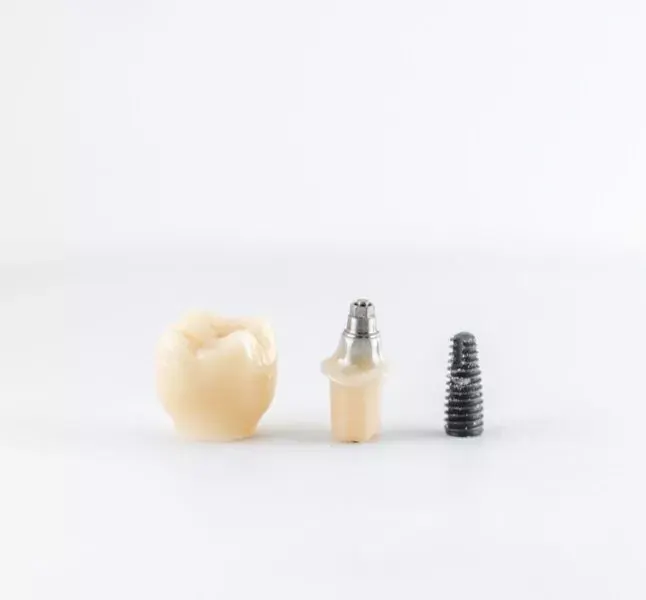
Teeth in a day: immediate-load implants
We offer immediate-load implants for patients who want results quickly. Placing the crown or prosthesis on the day of surgery means you can leave the clinic with a restored smile.
Not every case is suitable: it depends on the quantity and quality of the bone, which we assess beforehand.
Aesthetics, function and long-term health
We care not only about how your smile looks but also about its function and long-term health. Our implant treatments offer personalised care, a comfortable experience and natural-looking results.
When is a dental implant recommended?
When one or more teeth are missing, or when a removable denture is no longer stable or comfortable. Because an implant replaces the root as well, neighbouring teeth do not need to be filed down as they would for a conventional bridge, and the bone in the area is better preserved.
You need enough bone and healthy gums. If bone is lacking it can sometimes be regenerated; we assess this at your first visit.
What does treatment involve, step by step?
- Assessment: examination, 3D X-ray (CBCT) and intraoral scan.
- Digital planning of the implant position and, where appropriate, a surgical guide.
- Implant placement under local anaesthetic.
- Osseointegration: the bone bonds to the implant over several months (with immediate loading you wear temporary teeth from day one).
- Final crown or prosthesis, designed from the digital scan.
- Regular check-ups and maintenance.
How long does the whole process take?
In a standard case, four to seven months usually pass between surgery and the final crown, because the bone needs time to secure the implant. Bone grafting or a sinus lift adds time. We give you a specific schedule after the assessment.
How do I look after an implant?
Like a natural tooth, but consistently: brushing, cleaning between teeth and regular check-ups. The main cause of late implant failure is peri-implantitis, an inflammation that destroys the bone around the implant and is closely linked to plaque control and smoking.
Who will treat you

Dra. María Luz Gil Jiménez
Implantology and periodontal surgery
Registration no. 28010628

Dr. Muhammad El-Hachem Debek
Medical director · Prosthodontics and aesthetics
Registration no. 28013715
Frequently asked questions about dental implants
Are dental implants suitable for all patients?
While dental implants are an excellent solution for tooth loss, a prior evaluation is essential to determine a patient's suitability. Factors such as bone density and overall oral health influence this decision.
How long do dental implants last?
With proper care and regular check-ups, dental implants can last a lifetime. Maintaining optimal oral hygiene and visiting your dentist regularly are essential to ensure the implant's longevity.
Is the implant placement procedure painful?
We strive to ensure that every procedure is performed with maximum patient comfort. Implant surgery is performed under local anaesthetic, and most patients report minimal discomfort afterwards.